
Table of Contents
ToggleRemember wishing for Doraemon’s pocket? A pocket filled with gadgets that could solve almost every problem. I never got Doraemon’s pocket. But in a way, I got something surprisingly close, AI.
I still remember when for a single doubt we opened a dozen browser tabs. One for industry research, another for writing inspiration. A few more for reports, grammar checks, analytics, competitor content, and endless notes scattered across different documents. Before I knew it, I’d spent more time switching between tabs than actually creating something meaningful.
For many professionals, the biggest challenge is not the work itself, it’s everything around it. Researching, organizing, rewriting, formatting, summarizing, fact-checking, and searching for information quietly consume hours every single day.
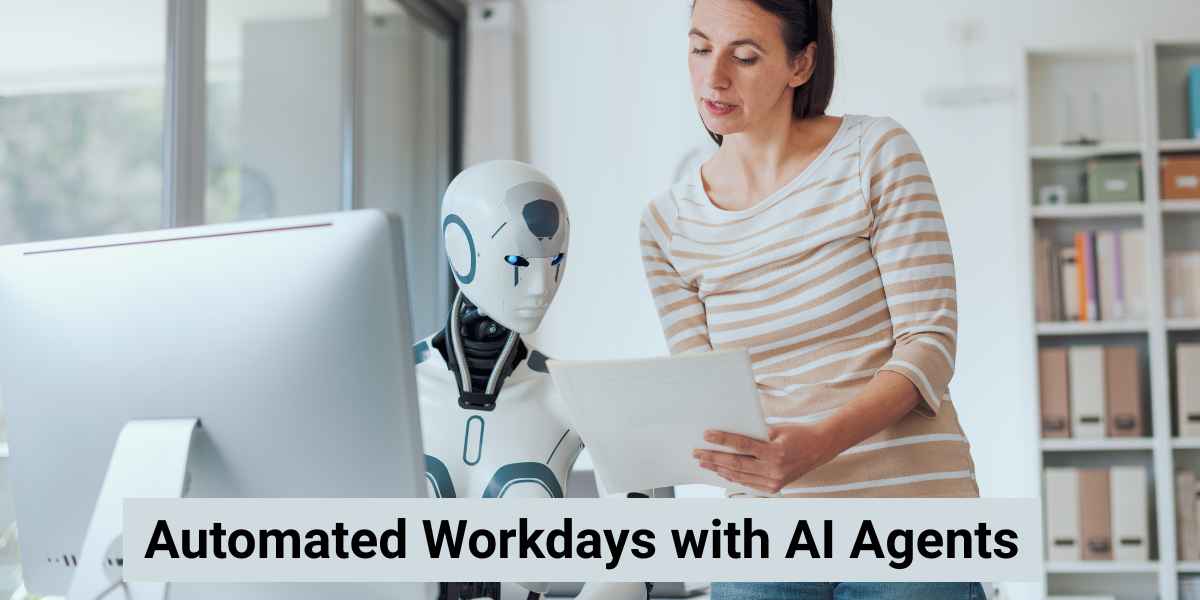
Then AI agents entered the picture. Not as robots replacing people, but as silent collaborators. They handle the repetitive work, leaving the thinking, creativity, and decisions making to us.
Today, my workday looks very different. Not because AI does my job. But because it helps me do it better.
So, let me take you through an automated day in my life, and show you how AI agents have quietly become some of my most reliable teammates.
The Workday Nobody Talks About
Everyone talks about productivity as if the goal is to finish work faster. For the longest time, I believed that too. I thought if I could write quicker, I’d somehow become more productive. But after paying attention to how my day actually looked, I realized writing was never the part slowing me down.
It was everything that happened before the writing. One article led to another. A report opened three more reports. A simple Google search somehow ended with fifteen tabs that I promised myself I’d read later. Before a single paragraph was written, half the day had already disappeared into research, fact-checking, organizing notes, comparing sources, and trying to remember where I’d saved that one document from last week.
The funny part? None of this looked like “real work,” yet it quietly took up most of my day. And I know it wasn’t just me. Every profession has its own version of this invisible workload, the tasks that support the work but never get noticed.
My AI Team Doesn't Replace Me, It Supports Me
One question someone asked me, “So, does AI write everything for you now?”
Honestly, I understand why people ask. From the outside, it probably looks like you type one prompt, wait a few seconds, and a complete article magically appears.
I wish it were that simple. What actually happens is very different. Before I even begin writing, I have different conversations with AI. One helps me understand what’s happening in the industry. Another helps me organize the mess of ideas sitting in my notes. Sometimes I ask it to challenge my point of view because the best ideas don’t come from agreement, they come from asking right questions.
By the time I start writing, I already know where I’m going. The words are still mine. The stories are still mine. AI simply helped clear the road before I started walking.
My AI Team Doesn't Replace Me, It Supports Me
One of the biggest myths about AI is that it’s here to help us work less. Honestly, that hasn’t been my experience at all.
My to-do list hasn’t magically become shorter. Deadlines still exist. Meetings still happen. There are still articles to write, presentations to build, emails to reply to, and ideas that refuse to come together on the first try.
What has changed is how I spend my time. Earlier, a large part of my day disappeared into tasks that needed to be done but didn’t really need my full attention. Searching for an old document. Rewriting the same email for the fifth time. Organizing notes from different meetings. Formatting a presentation. Reading through pages of information just to find three useful insights. None of these tasks were difficult, but together they quietly consumed hours.
The strange thing about repetitive work is that it doesn’t just take time, it takes mental energy. Every small decision, whether it’s choosing a better heading or figuring out where a file was saved, asks your brain to switch gears. One decision doesn’t feel like much, but hundreds of them throughout the day leave you mentally exhausted before you’ve even reached the work that actually matters.
That’s where AI agents have made the biggest difference for me. Instead of starting from scratch every single time, I start with a foundation. Research is already organized. Long documents are already summarized. My scattered notes are grouped into something that makes sense. Rather than spending the first half of my day preparing to work, I can actually begin working.
The responsibility is still mine. The final decisions are still mine. AI isn’t doing the thinking for me; it’s simply removing the repetitive steps that come before it.
And maybe that’s what automation is really about. Not reducing the amount of work we do, but reducing the amount of unnecessary work that stands between us and the work we actually enjoy doing.
A Typical Morning Looks Very Different Today
A few years ago, my mornings always started the same way—with a long list of questions.
What’s happening in the industry today? Did I miss any important news? Where did I save my notes from last week? Which topic should I write about? Is there any recent report I should read before I start?
Before I had even created anything, I had already spent an hour jumping between websites, newsletters, documents, and browser tabs. By the time I finally sat down to write, my mind already felt crowded.
Today, that routine looks completely different. Instead of spending my first hour gathering information, I spend it understanding it. Industry updates are already summarized. Research is organized. Meeting notes are converted into action points. Content ideas are grouped together instead of being scattered across sticky notes and random documents.
It doesn’t mean every answer is ready for me, and honestly, I wouldn’t want it to be. The thinking still belongs to me. I still decide which idea is worth exploring, what perspective I want to share, and how I want to tell the story.
The difference is that I no longer spend half my morning preparing to begin. I can begin almost immediately. And that changes more than just my schedule, it changes my mindset.
Instead of asking myself, “Where do I start?” the first question now is, “What do I want to create today?” It sounds like a small shift, but it completely changes the way the rest of the day unfolds. When you spend less time searching and more time creating, work starts to feel less like a checklist and more like something you’re genuinely excited to do.
AI Agents Are Different from AI Chatbots
For the longest time, I thought AI was just another chatbot. You ask a question, it gives you an answer, you say “thank you,” and the conversation ends. That’s how most of us were introduced to AI.
AI agents feel different. Instead of helping with just one question, they stay with you through the entire process. If I’m working on a new article, it doesn’t stop after suggesting a few ideas. It helps me research what’s trending, organize my thoughts, identify gaps, and prepare a strong starting point before I begin writing.
That’s what makes AI agents different. They don’t just answer questions, they help move the work forward. And somewhere between asking for help and finishing a project, they start feeling less like a tool and more like a teammate.
Every Profession Is Building Its Own Digital Team
The more I started using AI, the more I realized this wasn’t just changing the way I work. It was changing the way everyone works.
A marketer uses AI to understand campaign performance before planning the next one. A salesperson walks into a meeting after getting customer insights in minutes instead of spending hours researching. HR teams spend less time on repetitive paperwork and more time focusing on people. Developers use AI to review code, explain unfamiliar logic, or catch errors before they become bigger problems. The tools may be different, but the idea is the same. Every profession is slowly building its own digital team, not to replace human expertise, but to handle the repetitive work that gets in the way of it.
And honestly, that’s what makes this shift so exciting. AI isn’t becoming one profession. It’s quietly becoming part of every profession.
The Real Productivity Gain Is Mental Space
Whenever people talk about AI, the conversation almost always comes down to one question: “How much time does it save?” And while that’s important, I don’t think it’s the biggest advantage.
For me, the real difference is mental space. When I no longer have to switch between research, editing, formatting, and endless searching, my mind stays where it should, on the work that actually needs my attention. I’m not constantly breaking my flow to handle small, repetitive tasks. Instead, I get to spend more time thinking, creating, and connecting ideas.
I don’t always finish work earlier than I used to. But I do finish the day feeling like I spent more time doing meaningful work instead of simply managing it. And sometimes, that’s a much bigger productivity win than saving an extra hour.
What AI Still Can't Do
As helpful as AI has become, there are still things I wouldn’t trust it to do for me.
It can write a paragraph, but it can’t tell my story. It can suggest ideas, but it doesn’t know which experiences shaped the way I think. It has access to information, but it doesn’t have memories, curiosity, or the emotions behind every decision we make.
I’ve often asked AI to rewrite something I’ve written, and sometimes the result is grammatically perfect. But it also loses the little details that make the writing feel personal. Those moments, opinions, and experiences are what people connect with, not perfectly polished sentences.
That’s why I see AI as a collaborator, not a replacement. It can make my work better, but it can’t make it mine. My voice, my perspective, and my experiences are still the parts no technology can recreate.
The Future of Work Feels Surprisingly Human
The funny thing is, the more AI becomes part of my workday, the more I appreciate the things only humans can bring to the table.
AI can help me research faster, organize ideas, or improve a first draft. But it can’t build trust with a client, understand the emotion behind a story, encourage a teammate who’s having a difficult day, or come up with an idea simply because curiosity sparked it.
Maybe that’s why I don’t see AI replacing people. I see it changing what people spend their time on. As AI quietly takes care of repetitive tasks, we’re left with more time for conversations, creativity, critical thinking, and solving problems that don’t have a single right answer. Those are the moments where real value is created.
Perhaps that’s the future we’re moving towards. Not a workplace where humans compete with AI, but one where AI handles the routine work so humans can focus on the work that feels uniquely human.
The Workday of Tomorrow Has Already Started
The funny thing is, the more AI becomes part of my workday, the more I appreciate the things only humans can bring to the table.
AI can help me research faster, organize ideas, or improve a first draft. But it can’t build trust with a client, understand the emotion behind a story, encourage a teammate who’s having a difficult day, or come up with an idea simply because curiosity sparked it.
Maybe that’s why I don’t see AI replacing people. I see it changing what people spend their time on. As AI quietly takes care of repetitive tasks, we’re left with more time for conversations, creativity, critical thinking, and solving problems that don’t have a single right answer. Those are the moments where real value is created.
Perhaps that’s the future we’re moving towards. Not a workplace where humans compete with AI, but one where AI handles the routine work so humans can focus on the work that feels uniquely human.