
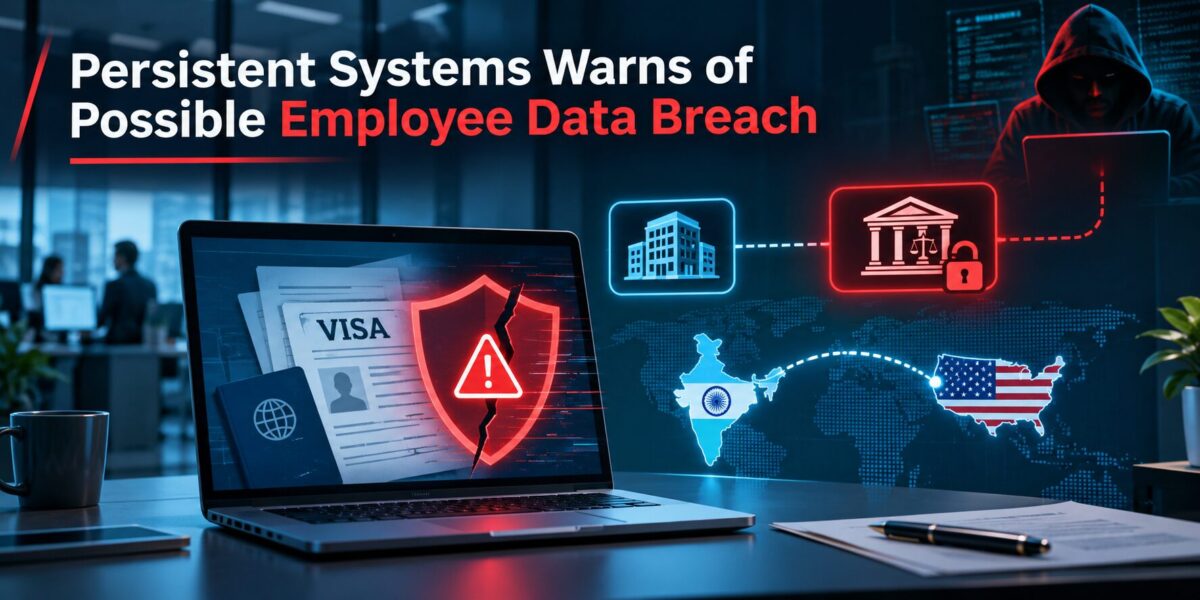
The Persistent Systems data breach alert has raised concerns about third-party cybersecurity risksPersistent Systems, a giant IT firm in India, has reported a potential data breach that concerns a legal firm in the USA associated with employee visas. It was reported that there was an unauthorized intrusion into the systems of the law firm that may have led to loss of sensitive information relating to visas.
Persistent Systems confirmed regarding its IT systems being intact and functional as per its report to the Indian stock markets dated November 23, 2026.
How Did the Persistent Systems Data Breach Occur?
As per the press release by the company, the breach has occurred at an external legal firm providing immigration services to its workers.
The incident can be the reason behind the illegal extraction and utilization of workers’ visa information.Nonetheless, the organization has not provided anymore information like the number of employees affected or the nature and extent of the documents that were exposed.
The names of the law firm that was involved in this incident has also not been revealed yet. Persistent Systems has stated that this incident is related to its third-party service provider and is not related to its own corporate structure.
Concerns About Cybersecurity of Third Parties
Due to the Persistent Systems employee data breach mentioned above, concerns about the cybersecurity practices of third-party vendor firms and other external providers have started to arise.
Usually, businesses pass on the confidential information about employees to consultants, law firms, or similar companies to carry out their day-to-day operations.
If a cybersecurity incident takes place in one of these firms, thus putting the confidential data at risk while keeping the internal systems safe.
In case the documents are immigration related, the data could be used for identity theft, phishing, and impersonation of persons.
How Can Organizations Reduce Third-Party Cybersecurity Risks?
In order to prevent the occurrence of another cybersecurity incident, organization should:
1.Connect with Third-Party Vendors: The assessment of third-party security should take place.
2.Minimize sharing of the information of confidential nature: Vendors should receive only minimum information required to provide their services.
3.Strict access restriction must be imposed: Any file which is sensitive must be protected with encryption and must have multi-level protection.
4.Monitoring and control of third parties is essential: Procedures of recognizing security incidents by vendors must be developed.
5.Plans of responding to incidents must be prepared: Vendors must immediately inform about the crimes committed against them and provide all information related to investigation.
Conclusion
The case of Persistent Systems data breach indicates how cyber safety risks can go beyond the internal framework of an organization. Despite the organization assuring that its systems are safe, the risk of possible employees’ data breaches shows the importance of the risks coming from third-party organizations, protection of data, and oversight of vendors.
Let’s refine your stalking skills; go through our Instagram and LinkedIn.