
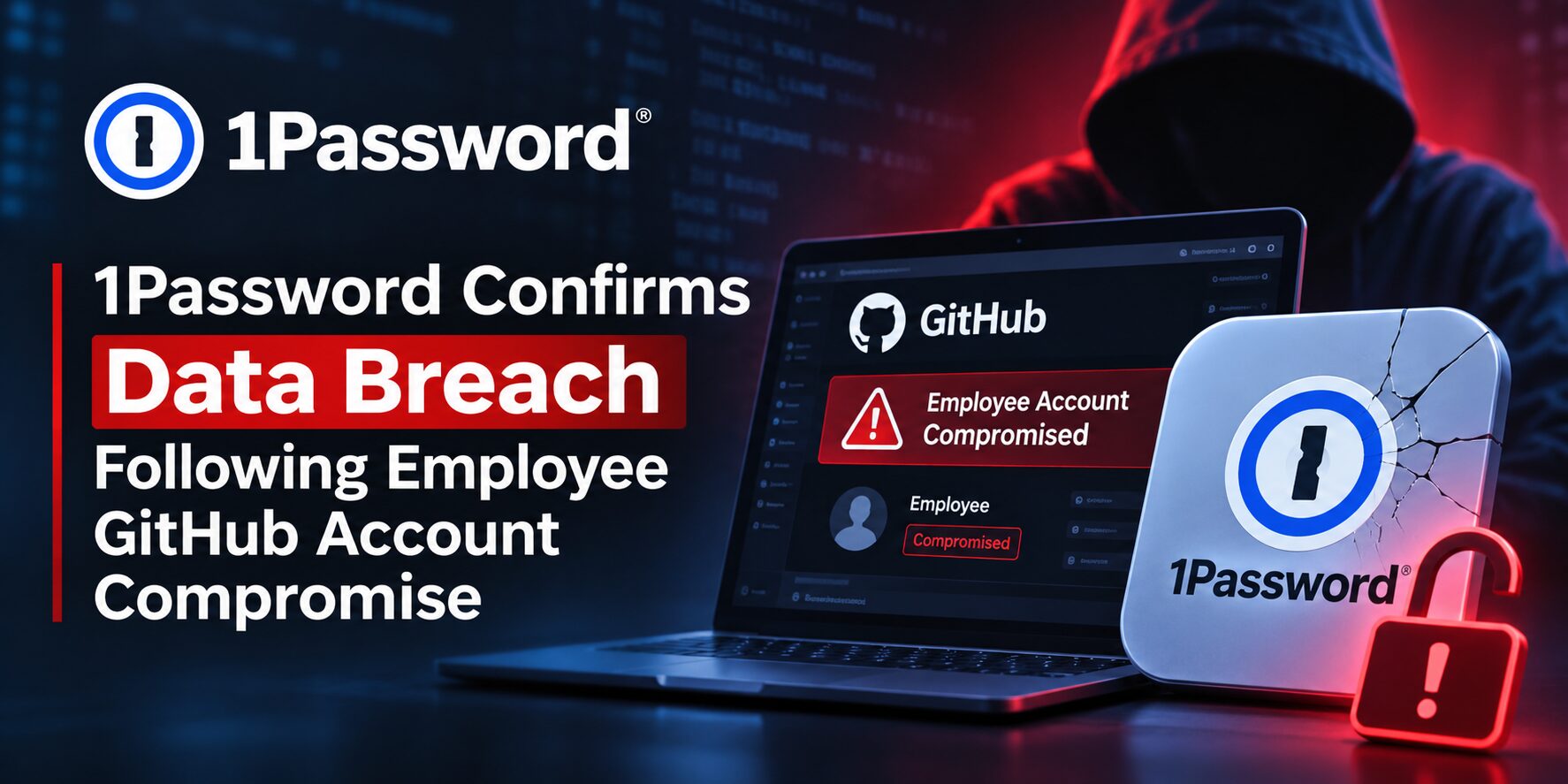
Password service provider 1Password has announced that it has suffered a data breach. An employee’s GitHub account had been hacked and this led to unauthorised access of 1Password’s systems. Consequently, both customer and internal data were leaked. Issues relating to identity and software development processes were consequently highlighted.
Importantly, 1Password has confirmed that customer password data is still safe within password ‘vaults’ and is encrypted.
How did the attack happen?
According to the company’s official disclosure on November 25, 2026, suspicious activity was first identified on November 19, when an attacker gained access to an employee’s corporate GitHub account.
The attacker used the compromised account to access private source code repositories and introduce malicious code into backend services. This allowed the unauthorized collection of customer account information. The attacker also accessed the company’s Continuous Integration and Continuous Delivery (CI/CD) environment.
What data was leaked?
The following data was leaked:
- Customer names and emails.
- Customer and user details.
- When a customer account was set up and last logged into.
- Public keys.
- Specific account reset and invite codes.
- Internal source code together with non-confidential account data.
Nevertheless, 1Password has confirmed that no data including customer passwords, Secret Keys, encrypted data and encryption keys was leaked.
At present, no details have been given regarding the number of customers impacted by this breach.
What action did 1Password take?
On realising the data breach, 1Password de-activated the employee’s GitHub account. It additionally cancelled illicit access tokens and changed any potentially leaked internal credentials.
Further, 1Password reviewed and enhanced the security of its development systems. Extra monitoring tools were also implemented. External security specialists have been brought in to assess 1Password’s actions.
Why is this significant?
Whilst customer passwords continue to be safely encrypted, the leaked personal data may be utilised by hackers to conduct focussed phishing and social engineering scams.
This case emphasises the significance of ensuring that both staff and software development related data – such as source code and CI/CD systems – are adequately secured. Hackers can exploit one employee account to then gain access to vital business systems.
What should customers do?
Customers should be wary of unsolicited account reset notifications, and requests to log in to accounts. Likewise, they should be cautious of communications purportedly from 1Password. Customers can further minimise the risk of falling victim to phishing by employing multi-factor authentication and only logging into accounts using genuine 1Password apps.
For now, 1Password has indicated that there is no necessity for customers to alter their passwords and/or Secret Keys.
Conclusion
This 1Password data breach has illustrated that staff identities can pose a security risk, despite a company’s concentration on security. Although encryption contributed to the continued safety of customer passwords, this case again emphasises the value of robust identity, monitoring and software development procedures.
Let’s refine your stalking skills; go through our Instagram and LinkedIn.