

Table of Contents
ToggleSummary
Ransomware in 2026 looks fundamentally different from the “lock your files and demand payment” model of a few years ago. Attacks now routinely combine data theft, multi-extortion pressure tactics, and sometimes no encryption at all, delivered by a Ransomware-as-a-Service industry that’s lowered the skill barrier to entry and lets displaced groups reform quickly after law enforcement takedowns. Attackers increasingly get in through unpatched edge devices like VPNs and firewalls rather than obvious malware, often disable security tooling early in the attack, and can move from initial access to full encryption in a matter of hours. Effective defense requires layering: aggressive patching of internet-facing systems, MFA everywhere, network segmentation, immutable and regularly tested backups, behavioral detection that catches early warning signs rather than the final encryption event, and an incident response plan that’s been tested before it’s actually needed. The data on paying ransoms is discouraging — most who pay get attacked again, and full data recovery is far from guaranteed — while involving law enforcement early correlates with lower overall costs. AI is accelerating both attacks and defenses simultaneously, making this not a one-time fix, but ongoing arms race organizations need to keep pace with. Ransomware in 2026 looks fundamentally different from the “lock your files and demand payment” model of a few years ago. Attacks now routinely combine data theft, multi-extortion pressure tactics, and sometimes no encryption at all, delivered by a Ransomware-as-a-Service industry that’s lowered the skill barrier to entry and lets displaced groups reform quickly after law enforcement takedowns. Attackers increasingly get in through unpatched edge devices like VPNs and firewalls rather than obvious malware, often disable security tooling early in the attack, and can move from initial access to full encryption in a matter of hours. Effective defense requires layering: aggressive patching of internet-facing systems, MFA everywhere, network segmentation, immutable and regularly tested backups, behavioral detection that catches early warning signs rather than the final encryption event, and an incident response plan that’s been tested before it’s actually needed. The data on paying ransoms is discouraging — most who pay get attacked again, and full data recovery is far from guaranteed — while involving law enforcement early correlates with lower overall costs. AI is accelerating both attacks and defenses simultaneously, making this less a one-time fix than an ongoing arms race organizations need to keep pace with.
Ransomware Defense in 2026
There is an anxiety that a person experiences when finding a ransom note on the display of his/her computer. In this case, one can see that the login prompt does not work, the file extensions look different, and the desktop needs to be updated by a timer. The thing is that this is not just an imagination anymore. Statistics show that more than 44% of data breaches have been due to ransomware.This is a significant increase as compared to previous years. The attackers are getting faster and more organized and it is becoming difficult to predict their actions.
The number of attacks outstanding. More than 7,500 companies have been found on the dark web by leak sites in just one year. And this number keeps rising despite the fact that fewer victims admit that they paid ransom. What actually differs today from years ago is the methods of attacks. In the past, the attack was just about data encryption. But today it is just part of a bigger plan which includes data theft, bullying clients and business partners, and sometimes even not data encryption.
This guide is about building a defense strategy that actually reflects how ransomware works today, not how it worked five years ago. We’ll go through how attacks unfold now, where they get in, what a layered defense actually looks like in practice, and what to do if — despite everything — you get hit anyway.
Ransomware Has Changed Shape, Not Just Scale
If you’re picturing ransomware as a piece of malware that sneaks in, encrypts your files, and demands payment, you’re picturing something closer to 2018 than 2026. The core idea is the same, but almost everything around it has evolved.
Double and triple extortion are now the norm, not the exception. Attackers don’t just lock your systems anymore — they quietly copy your data out first, then threaten to publish it whether you pay or not. Some go further still, threatening additional attacks, contacting your customers directly, or filing regulatory complaints against you for failing to disclose the breach fast enough. There was a case where an attacker group actually reported their own victim to a securities regulator for not disclosing the incident within the required window, which tells you something about how far the pressure tactics have gone.
A meaningful chunk of attacks now skip encryption entirely. As backups have gotten better and more organizations refuse to pay for a decryptor, some ransomware groups have simply stopped bothering with encryption and gone straight to data theft and extortion. Why deal with the complexity of encrypting an entire network when the threat of leaking sensitive files does the job just as well, especially against companies that have finally gotten their backup strategy in order?
The time between “in” and “done” has collapsed. What used to take attackers days now sometimes takes hours. Some ransomware operators can go from initial access to full domain encryption in under four hours. That’s not a lot of runway for a security team to notice something’s wrong, isolate the affected systems, and stop the spread before it’s already over.
Ransomware-as-a-Service turned this into an actual industry. The people writing ransomware code and the people deploying it against your network are often entirely different groups now. RaaS operators build the malware, run the infrastructure, and even offer something resembling customer support to victims trying to pay — then lease all of it out to affiliates who do the actual breaking-in, for a cut of whatever gets paid. This has lowered the skill floor for launching an attack to nearly nothing, which is a big part of why attack volume keeps climbing even as some individual groups get taken down by law enforcement.
Groups rise, fall, and get replaced faster than most people can track. Major operations like LockBit and ALPHV/BlackCat have been disrupted by international law enforcement efforts, and yet ransomware hasn’t slowed down — it’s just redistributed. Newer groups have absorbed displaced affiliates and scaled up shockingly fast; one relatively young operation grew its victim count by well over 500% in a single year. The lesson here isn’t that any individual takedown doesn’t matter — it clearly does — but that the underlying business model survives even when specific brands don’t.
How Attackers Are Actually Getting In
Understanding entry points matters more for defense planning than understanding ransom payment statistics, honestly, because this is the part you can actually do something about before an attack starts.
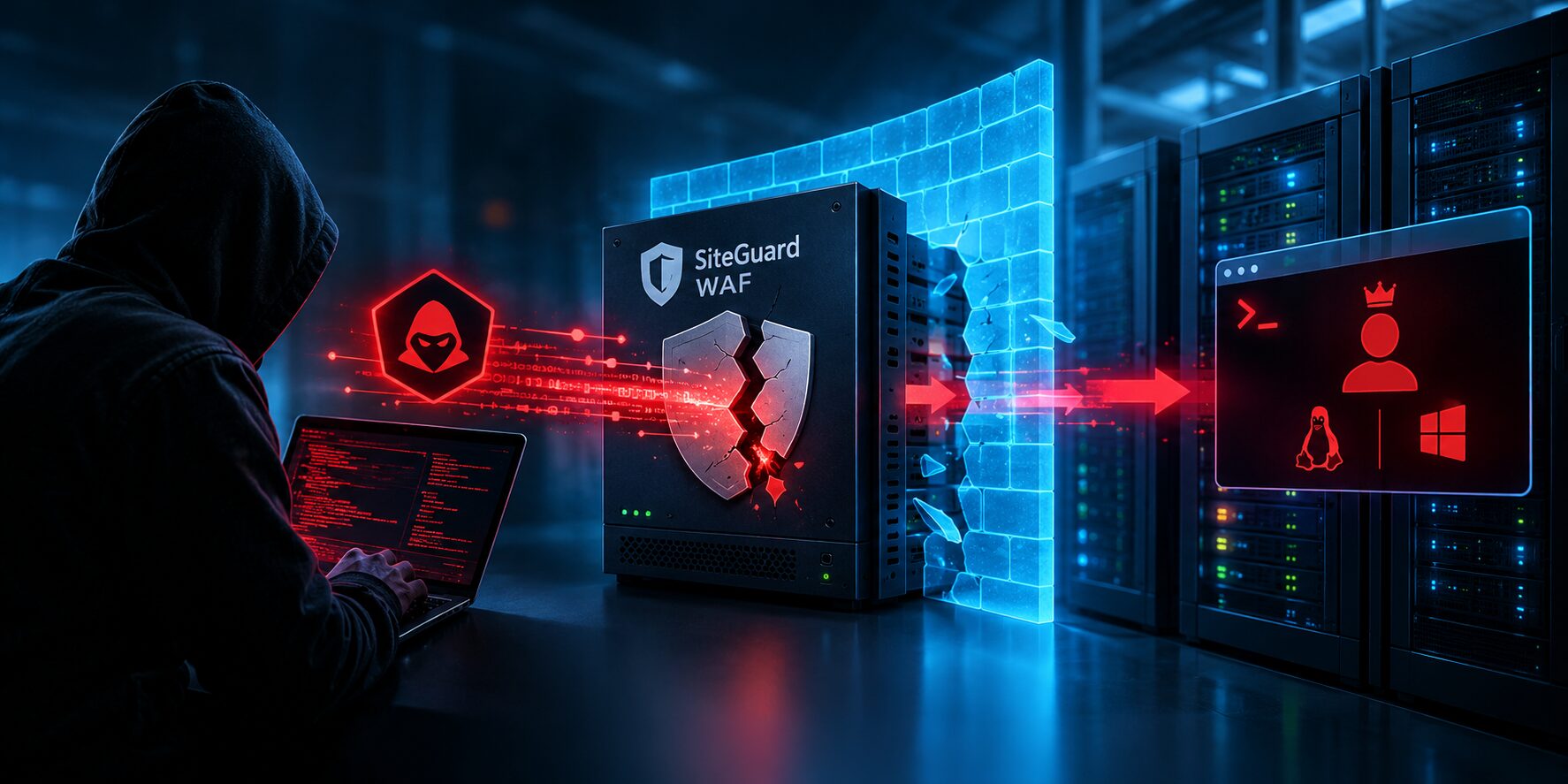
Edge devices have become the preferred front door. The new favorite entry point is the edge devices. Attackers are relying on VPNs, firewalls, and other network gateways way more than before to get a foothold in the network than prior methods like using stolen credentials. This shift is due in part to many new vulnerabilities that have been found in edge devices, making the time between publishing a vulnerability and it getting exploited virtually nonexistent. Therefore, patch management in the field of information technology is no longer a simple task, and in the case of edge devices, it’s harder to catch up with the vulnerabilities after they have just been reported.
Most initial access doesn’t involve malware at all. A large majority of initial access attempts now rely on stolen credentials, social engineering, or abusing legitimate remote access tools rather than dropping a traditional malicious file that antivirus software might catch. That’s a meaningful shift — it means a lot of the tooling built to catch “malware” specifically is looking in the wrong place for how attackers are actually walking through the door.
Managed service providers are a favorite target precisely because of what they manage. Compromise one MSP with broad remote access into a thousand client networks, and you’ve effectively compromised a thousand companies in one move. This is exactly what happened in a widely reported incident involving a technology distributor, where the fallout disrupted operations for resellers and managed providers downstream for nearly a week. If your organization relies on an MSP with standing access to your systems, their security posture is functionally part of your own attack surface, whether anyone’s framed it that way internally or not.
Attackers increasingly try to blind your defenses before doing anything else. A growing share of intrusions now start with an active attempt to disable or kill endpoint detection tools, often by abusing legitimate signed drivers to slip past security software that would otherwise flag the activity — a technique researchers call “bring your own vulnerable driver.” The practical implication is that evasion isn’t opportunistic anymore; it’s a planned, repeatable phase of the attack. Your detection tooling itself is now a target, not just a bystander.
What a Layered Defense Actually Looks Like
There’s no single control that stops ransomware. Anyone selling you one product as “the answer” is selling you something incomplete. What works is layering defenses so that a failure at any one point doesn’t automatically mean the attacker wins.
Close the doors attackers actually useClose the doors attackers actually use
Given how much initial access now comes through edge devices, patch management for internet-facing systems deserves priority over almost everything else on this list. Automate it where you can, and treat Virtual Private Network (VPNs), firewalls, and remote access gateways as the highest-priority patching targets in your environment, not an afterthought behind internal servers.
Multi-factor authentication across every access point — not just email, but VPNs, admin panels, and remote access tools — closes off a huge share of the credential-based access attempts that still make up a substantial share of intrusions. And since attackers increasingly rely on legitimate remote access tools rather than obvious malware, it’s worth actually auditing which remote access software is authorized in your environment and disabling or tightly monitoring anything that isn’t.
Assume something will get through, and plan for that
Segmentation is what limits how far an attacker can travel once they’re in. A flat network where one compromised laptop can reach your finance servers, your backup infrastructure, and your customer database is a gift to anyone who gets past your front-door defenses. Segmenting critical systems and applying least-privilege access so that compromising one account doesn’t hand over the keys to everything dramatically shrinks the blast radius of a successful intrusion.
Endpoint detection and response matters here specifically because of how attackers try to disable security tooling early in an attack. EDR that can detect attempts to kill or blind security processes — rather than just scanning files for known malware signatures — is a meaningfully different and more relevant category of defense against how attacks actually unfold now.
Backup like your backups are also a target — because they areBack up like your backups are also a target — because they are
The old 3-2-1 backup rule (three copies, two different media types, one offsite) is still sound advice, but it’s no longer sufficient on its own. Ransomware groups actively hunt for backup infrastructure specifically, because they know a company that can restore from backup has far less reason to pay. If an attacker can reach and destroy or encrypt your backups, your recovery options collapse right along with your primary systems.
That means backups need to be immutable — genuinely unable to be altered or deleted, even by someone with elevated credentials on your main network — and they need to be tested regularly, not just configured once and assumed to work. A backup you’ve never actually tried restoring from is a hypothesis, not a safety net. Regularly running real recovery drills, not just checking that a backup job completed successfully, is the only way to know whether it’ll actually save you when it matters.
Train people, but design around the assumption they'll still click something
Phishing simulations and security awareness training genuinely help, but treating them as the primary defense is a mistake — people are going to click the wrong thing eventually, no matter how well trained they are, because attackers are getting better at making that click look completely reasonable. The goal of training isn’t a zero-click-rate fantasy; it’s reducing the frequency of mistakes while making sure your other layers of defense can absorb the ones that still happen.
Watch for the early signs, not just the final encryption event
By the time files start visibly encrypting, the attack is often already near its end, not its beginning. AI-based anomaly detection and behavioral monitoring can catch the earlier signals — unusual data transfers, a login from a strange location at a strange hour, a sudden spike in file access patterns — before the actual encryption payload ever runs. Given how compressed attack timelines have gotten, catching an intrusion in its early hours rather than its final minutes is often the entire difference between a contained incident and a company-wide crisis.
The Question of Whether to Pay
This deserves honest treatment rather than a simple “never pay” slogan, because the real-world data is more nuanced than that framing suggests.
The trend is clearly toward refusal — the majority of organizations hit by ransomware now decline to pay, up meaningfully from a few years ago, and that shift appears to be putting real financial pressure on ransomware operators, whose total tracked payments have been declining even as attack volume climbs. But refusal doesn’t mean the attack didn’t happen or didn’t cost anything; it just changes where the cost lands, usually toward recovery time and operational disruption instead of a direct payment.
For organizations that do pay, the outcomes are genuinely discouraging. A large share of organizations that pay get attacked again within a year — suggesting that paying doesn’t actually buy the security improvement people hope it will, and may even mark you as a soft target. Only a small fraction of paying victims recover all of their data even after payment, since decryption tools provided by attackers are often unreliable or incomplete. And the financial math rarely works out the way it seems like it should upfront — actual negotiated payments tend to land far below the initial demand, but recovery costs (downtime, IT overtime, lost business, reputational damage) usually dwarf the ransom itself by a wide margin.
Involving law enforcement early, rather than trying to handle everything quietly and internally, correlates with meaningfully lower overall incident costs — likely because agencies like the FBI’s Internet Crime Complaint Center and international partners have visibility into decryption tools, threat actor behavior, and negotiation patterns that most individual companies simply don’t have access to on their own
Building an Incident Response Plan Before You Need One
The organizations that come through a ransomware attack in reasonable shape are almost never improvising in the moment. They’re executing a plan that was written, tested, and updated before anyone was under pressure.
A workable plan starts with clear containment steps — who has the authority to disconnect systems from the network, and how fast can that actually happen without waiting for approval chains that don’t function well during a crisis. It includes a communication plan covering employees, customers, regulators, and possibly law enforcement, because silence or delay tends to make the eventual disclosure look worse than the incident itself. It designates, in advance, who makes the call on whether to engage with attackers at all, rather than leaving that decision to be made under duress by whoever happens to be in the room.
And critically, it gets tested. A tabletop exercise that walks through a simulated attack — who gets called, what gets isolated, how backups get verified before restoration — surfaces gaps in a conference room that you’d much rather find there than during an actual live incident, when every gap costs real time and money.
Where AI Fits on Both Sides of This
It would be incomplete to talk about ransomware defense in 2026 without addressing how AI is reshaping the fight, because it genuinely is, on both sides at once.
On the attacker’s side, generative AI tools are being used to write phishing emails that no longer carry the awkward phrasing and obvious red flags that used to make them easier to spot, and to speed up reconnaissance on potential targets. Voice cloning and deepfake technology have already been used in real, expensive incidents — including a case where fraudsters used deepfake audio and video convincingly enough to trick a company’s finance team into transferring tens of millions of dollars.Trend forecasters widely expect attacks generally to keep getting faster and more automated as attackers lean further into AI-assisted tooling.
On the defensive side, the same underlying technology is what makes modern anomaly detection possible at the speed current attacks demand — spotting the unusual data transfer or the odd login pattern quickly enough to matter, rather than discovering it in a post-incident log review three weeks later. The uncomfortable truth is that this has become something close to an arms race, where the side that automates detection and response faster than the other side automates attacks tends to come out ahead. Standing still isn’t a neutral position anymore; it’s effectively falling behind.
Getting the Fundamentals Right
None of this works as a checklist you complete once. Ransomware defense in 2026 is closer to an ongoing discipline than a project with an end date, and a handful of principles tend to separate organizations that weather an attack from ones that don’t.
Patch the internet-facing stuff first and fastest, because that’s where the door is currently wedged open. Assume credentials will eventually be compromised and design your network so that one stolen login doesn’t cascade into everything. Treat backups as a target that needs its own protection, not a passive safety net that just sits there working. Keep training people while accepting that training alone won’t be enough. Watch for the early signals of an intrusion rather than waiting to notice the final encryption event, because by then the window to prevent real damage has usually already closed. And have a real plan — written, tested, updated — for the day this anyway happens, because “anyway” is doing a lot of work in the current threat environment, and hoping it doesn’t apply to you isn’t a strategy.
Frequently Asked Questions
Q:1 Is paying the ransom ever the right call?
Answer : Most organizations now refuse to pay, and the data explains why: a large share of those who pay get attacked again within a year, and full data recovery even after payment is far from guaranteed. Paying should be a last resort weighed against real recovery options, not a default reaction to pressure or panic.
Q:2 Are backups alone enough to protect against ransomware?
Answer : No. Attackers actively hunt for and try to destroy backup infrastructure specifically, knowing it’s what gives victims leverage to refuse payment. Backups need to be immutable, isolated from your main network, and regularly tested through real restoration drills — not just scheduled and assumed to work.
Q:3 Why are VPNs and firewalls such common entry points now?
Answer : Because they’re internet-facing by design, and the gap between a new vulnerability being disclosed and attackers exploiting it has shrunk dramatically — sometimes to zero days. Aggressive, prioritized patching of edge devices matters more now than almost any other single control.
Q:4 How much has AI actually changed ransomware attacks?
Answer : Significantly. AI helps attackers write more convincing phishing content, speeds up reconnaissance, and has already enabled real deepfake-driven fraud worth tens of millions of dollars. It’s also improving defensive anomaly detection, making this an active arms race rather than a settled threat landscape.
Q:5 What's the single most important defense for a small business with limited resources?
Answer : Multi-factor authentication across every access point, paired with tested, immutable backups. Small businesses are disproportionately targeted because attackers assume weaker defenses, and these two controls address the most common entry method and the most common point of leverage attackers rely on.