
Table of Contents
Toggle“The world doesn’t change when you change your mind. But your experience of the world does.”
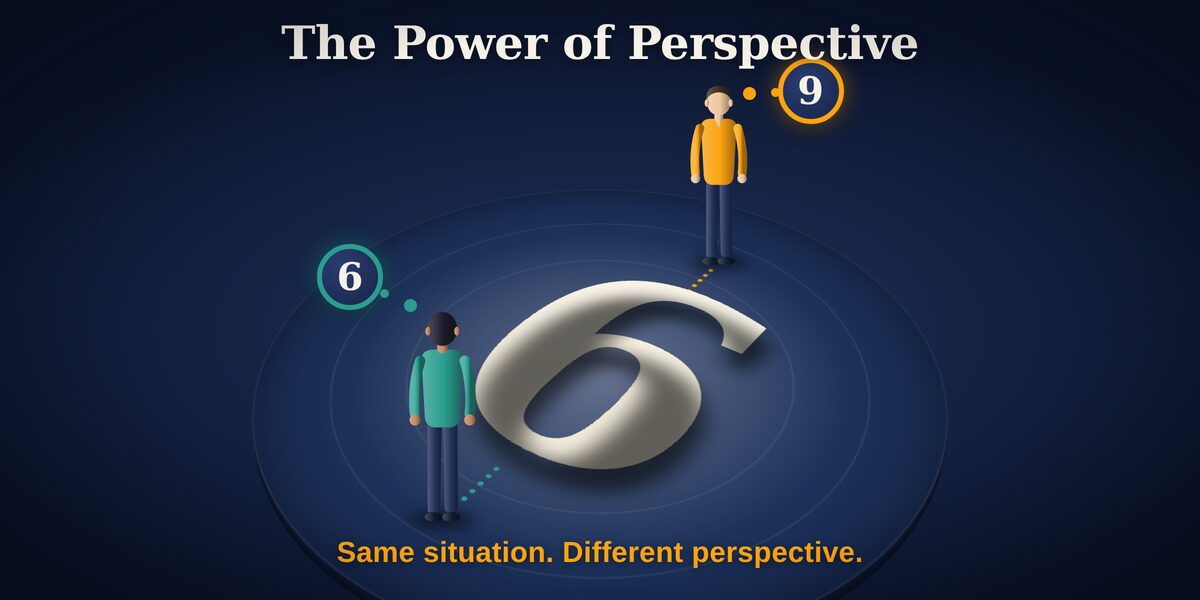
Imagine standing in front of a painting. From one angle, you notice its vibrant colours. Move a few steps to the left, and a hidden figure appears. Step back, and what once looked like random brushstrokes suddenly comes together as a masterpiece. The painting hasn’t changed, only your perspective has. Life works much the same way.
Many of our biggest breakthroughs in careers, relationships, leadership, and personal growth don’t come from discovering something entirely new; they come from seeing the same situation through a different lens.
In an era where artificial intelligence can analyse data, generate reports, and automate tasks in seconds, one uniquely human capability is becoming more valuable than ever: the ability to shift perspective. Not just to understand someone else’s point of view, but to challenge, rethink, and expand our own.
Why Perspective Matters More Than Ever
Most people believe that better decisions come from having more information. While that’s sometimes true, the real challenge is often not a lack of information—it’s looking at a problem from only one perspective. The way we interpret a situation influences the decisions we make, and sometimes, a simple shift in thinking can reveal opportunities that were hidden all along.
History’s greatest innovations weren’t created because someone had access to more information than everyone else. They happened because someone dared to ask a different question. Think about ideas that once sounded impossible:
- What if people could carry computers in their pockets?
- What if you could book a taxi without making a phone call?
- What if learning became part of everyday work instead of something employees attended a few times a year?
Every breakthrough started with a change in perspective before it became a change in reality.
Why Perspective Is a Competitive Advantage Today
The modern workplace is evolving rapidly, and so are the skills that matter most. While AI is transforming how we work, it also highlights the soft skills robots can’t replace, the unique strengths that humans bring to the table.
AI can:
- Recognize patterns in massive datasets.
- Automate repetitive tasks.
- Optimize existing processes.
- Generate answers in seconds.
Humans can:
- Ask better questions.
- Reframe complex problems.
- Connect unrelated ideas.
- Imagine possibilities that don’t yet exist.
Knowledge is no longer the biggest differentiator—it’s available to almost everyone. The real competitive advantage lies in the ability to think differently, challenge assumptions, and see opportunities where others see obstacles.
In the AI era, success won’t belong only to those who know the most. It will belong to those who can shift their perspective, adapt to change, and uncover possibilities that others fail to see.
The Invisible Lens We All Carry
Every one of us sees the world through an invisible lens shaped by our experiences, education, culture, successes, failures, beliefs, fears, and expectations. These lenses help us make quick decisions and make sense of the world around us, but they can also create blind spots including, unconscious bias, that limit how we interpret situations.
- Experiences shape how we react to similar situations.
- Education influences how we think and solve problems.
- Culture affects our values and assumptions.
- Successes reinforce what we believe works.
- Failures shape our caution and resilience.
- Beliefs guide our decisions, often unconsciously.
- Fears influence the risks we’re willing to take.
- Expectations affect how we interpret outcomes.
Consider two managers receiving the exact same employee feedback. One sees it as criticism and becomes defensive, while the other sees it as valuable insight and an opportunity to improve. The feedback is identical, but the interpretation is completely different.
Our perspective often shapes our reality more than reality itself. That’s why two people can walk out of the same meeting with entirely different conclusions. Neither is necessarily right or wrong, they’re simply seeing different parts of the same picture through different lenses.
Fixed Perspective vs. Flexible Perspective
Many people associate adaptability with learning new skills or adopting new technologies. But true adaptability begins much earlier, it starts with being willing to question your first interpretation of a situation.
A fixed perspective says, “This is how things are.” A flexible perspective asks, “Is there another way to see this?” It may seem like a small shift in thinking, but it can lead to dramatically different outcomes.
People with a flexible perspective are better equipped to navigate uncertainty because they don’t become attached to a single explanation or solution. They solve problems more effectively, make better decisions, understand different viewpoints, and uncover opportunities that others often miss.
Perspective isn’t about changing your opinion every time you hear a new idea. It’s about recognizing that your first reaction isn’t always your most accurate one—and that being open to another viewpoint is often where growth begins.
Why We Struggle to Shift Perspective
If shifting perspective is so valuable, why is it so difficult? The answer lies in how our brains are wired. We naturally seek certainty and tend to favor information that reinforces what we already believe, a tendency psychologists call confirmation bias. It’s an efficient way for our brains to process information, but it can also prevent us from seeing the bigger picture.
Consider a common workplace situation. An employee thinks, “My manager doesn’t value my work.” At the same time, the manager believes, “The employee seems disengaged.” Neither takes the time to understand the other’s perspective. What begins as an assumption quickly turns into a story, the story becomes a belief, and that belief starts shaping their actions and interactions.
Many conflicts at work, and in life, aren’t driven by bad intentions. They’re the result of incomplete perspectives. When we assume instead of asking, we often create problems that could have been solved with a simple conversation and a willingness to see the situation from another point of view.
Perspective Is a Leadership Superpower
Great leaders don’t just make decisions—they make an effort to understand how different people will experience those decisions. Before introducing a new policy, launching a change initiative, or solving a problem, they pause to ask questions such as:
- How will employees feel about this?
- How will customers react?
- What concerns might managers have?
- What perspectives are we missing?
This habit leads to better decisions, not because leaders have all the answers, but because they actively seek multiple viewpoints before taking action.
Perspective-taking also strengthens trust. When people feel their opinions are heard and valued, they’re more likely to engage, collaborate, and contribute new ideas. Teams become more open to discussion, innovation flourishes, and decisions are more balanced because different perspectives are considered instead of dismissed.
The most effective leaders aren’t always the smartest people in the room. More often, they’re the ones who are curious enough to listen, question their assumptions, and remain open to seeing situations from different angles.
The AI Era Rewards Perspective, Not Just Knowledge
For decades, knowledge was considered the ultimate competitive advantage. Today, that has changed. With AI, information is available almost instantly. It can explain complex concepts, summarize research, write code, generate presentations, and automate countless tasks. Knowledge is no longer scarce, it’s everywhere.
What has become truly valuable is the ability to interpret that knowledge in meaningful ways. The people who will thrive in the AI era won’t necessarily be those who know the most. They’ll be the ones who ask better questions, connect ideas that others don’t see, identify opportunities hidden in plain sight, and challenge assumptions, including their own.
While AI can provide answers, it can’t replace human curiosity, empathy, judgment, or the ability to view a problem from multiple perspectives. Perspective is emerging as one of the most important human skills because it isn’t something that can simply be downloaded or automated. It is developed over time through experience, reflection, open-mindedness, and a genuine willingness to learn from different viewpoints.
Six Practical Ways to Shift Your Perspective
Shifting your perspective isn’t a personality trait, it’s a skill that can be developed with practice. Like any other skill, it becomes stronger the more intentionally you use it. Here are six simple habits that can help you see situations more clearly and make better decisions.
1. Challenge Your First Conclusion
When something happens, resist the urge to jump to conclusions. Pause and ask yourself, “What else could explain this?” More often than not, your first interpretation is only one of several possibilities.
2. Replace Judgment with Curiosity
Instead of thinking, “Why would someone do that?”, ask, “What might they know that I don’t?” Curiosity encourages understanding, while judgment often shuts it down. Approaching familiar situations with a beginner’s mind makes this far easier
3. Look Through Different Lenses
Every decision affects different people in different ways. Before making an important decision, consider how it might look from the perspective of a customer, employee, manager, executive, newcomer, or industry expert. Each viewpoint reveals something valuable that you might otherwise miss.
4. Seek Different Opinions
It’s natural to seek validation from people who agree with us, but growth often comes from hearing opposing viewpoints. Disagreement isn’t always criticism—it can provide insights that strengthen your thinking and help you avoid blind spots.
5. Ask Better Questions
The quality of your questions shapes the quality of your thinking. Instead of asking, “Who’s responsible?”, ask, “What can we learn?” Instead of “Why won’t this work?”, ask, “What would make this work?” Better questions lead to better perspectives.
6. Reflect Before Reacting
Not every situation requires an immediate response. Taking a moment to reflect can prevent unnecessary misunderstandings and emotional decisions. Before reacting, ask yourself, “How will I look at this six months from now?” That simple pause often changes how you respond today.
Perspective Creates Better Relationships
The ability to shift perspective isn’t just valuable in the workplace, it has the power to transform our everyday relationships as well. Whether it’s with colleagues, friends, or family, seeing a situation from another person’s point of view helps us communicate more effectively and respond with greater empathy.
When we change our perspective, arguments become meaningful conversations, feedback becomes an opportunity to learn, and differences become chances to understand rather than reasons to disagree. Instead of focusing on proving that we’re right, we begin asking questions, listening more carefully, and appreciating experiences that differ from our own.
Perspective doesn’t mean you have to agree with everyone. It simply means you’re willing to understand where they’re coming from. And that willingness is often the foundation of stronger relationships, deeper trust, and more productive conversations.
Innovation Begins with a Different View
Every innovation begins with someone who chooses not to accept the obvious. It starts with a simple question: “Why?”—followed by an even more powerful one: “Why not?” This willingness to challenge assumptions is what turns ordinary ideas into extraordinary breakthroughs.
This mindset isn’t reserved for entrepreneurs or inventors. Teachers use it to improve how students learn. Parents use it to understand their children better. Designers use it to create better experiences. Doctors use it to explore new treatments. Leaders use it to solve complex business challenges. Creativity begins when we stop accepting problems as they are and start looking at them from a different perspective.
Building Perspective Every Day
Like any valuable skill, perspective grows through consistent practice. The more we expose ourselves to new ideas and experiences, the easier it becomes to challenge our own thinking.
You can strengthen your perspective by:
- Reading outside your area of expertise.
- Talking to people with different backgrounds and experiences.
- Traveling and experiencing new cultures whenever possible.
- Listening more than you speak.
- Questioning your assumptions instead of accepting them as facts.
- Reflecting on your decisions and the lessons they teach.
Most importantly, become comfortable with changing your mind. Holding onto an opinion simply because it’s familiar doesn’t lead to growth. Changing your perspective isn’t a sign of weakness, it’s a sign that you’ve learned something new and are willing to evolve.
The Perspective Advantage
As AI becomes increasingly capable of handling analytical, repetitive, and knowledge-based tasks, the qualities that make us uniquely human will become even more valuable. One of the most important among them is perspective, the ability to see beyond the obvious, rethink assumptions, and approach challenges from different angles.
Perspective enables us to lead with empathy, solve problems creatively, collaborate with people who think differently, navigate uncertainty with confidence, and make better decisions. These are skills that technology can support but never fully replace.
The people who thrive in the future won’t simply be those who adapt to change, they’ll be the ones who learn to see change differently. They’ll recognize opportunities where others see obstacles and possibilities where others see limitations.
Sometimes, the greatest transformation doesn’t come from changing your circumstances. It comes from changing the lens through which you see them. The world may remain the same, but the moment your perspective shifts, new opportunities, ideas, and solutions begin to appear, many of which were there all along, waiting to be discovered.
Let’s refine your stalking skills; go through our Instagram and LinkedIn.