
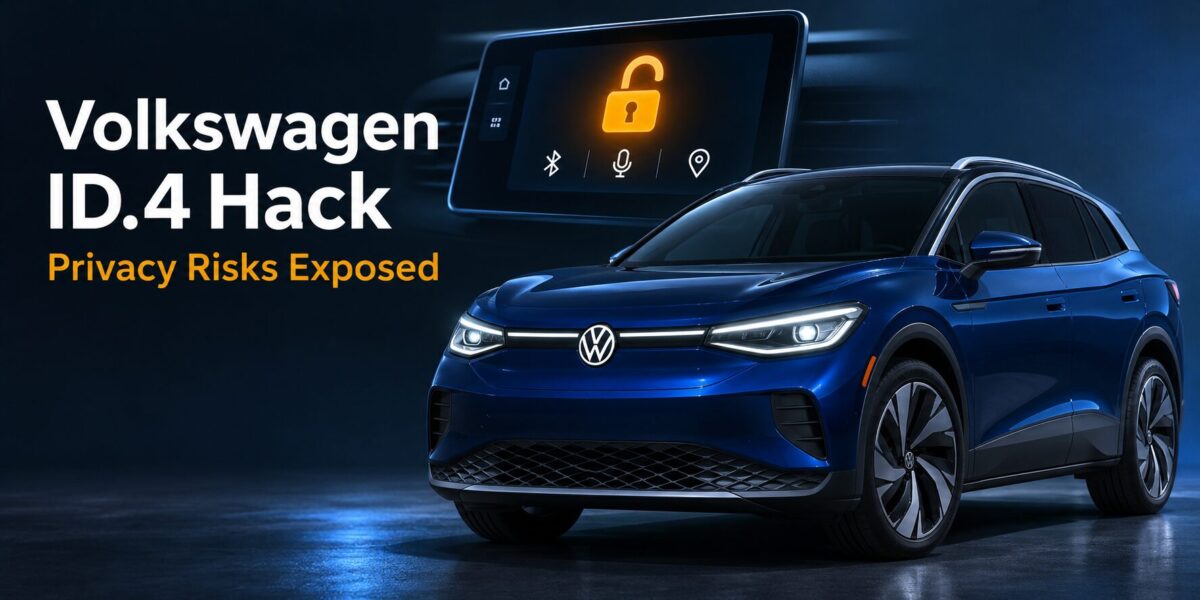
Security analysts have revealed worrisome security flaws in the ID.4 electric car manufactured by Volkswagen which raises the question of how secure modern cars are. It has become known that it is possible for hackers to utilize weaknesses in the entertainment system of the vehicle to not only find its location but also listen in to the conversations inside and get access to data on connected phones.
The findings were shared during the Nullcon Berlin security summit that took place on 5-6 November, 2026. The news caught attention after the reports were published on the 16th November.
How did Researchers Break into the Volkswagen ID.4?
A team of experts from PCA Cyber Security has uncovered various vulnerabilities related to the systems in the Volkswagen ID.4. Their review identified several weak points in Bluetooth communications and Apple CarPlay.
The researchers presented their findings by taking advantage of a vulnerability in Bluetooth systems, the PerfektBlue method, and combining it with other security flaws to gain unauthorized access to the car’s system.
To launch this attack, the attacker must be within the wireless range of the target vehicle and make sure that the car occupant approves the malicious connection request. The team also showed another vulnerability by linking a modified iPhone through the Apple CarPlay interface.
After the access was established, the researchers managed to avoid some of the security solutions in the car’s software.
What Could Be Accessed by Cybercriminals?
The demonstration presented alarming potential scenarios. According to the researchers, a hacked infotainment system may let attackers:
- Locate a vehicle’s position unnoticed by the owner;
- Read the contacts and messages stored on the connected phone;
- Capture conversations through the car’s microphone;
- Post unwanted messages on the infotainment display;
- Take control of some elements of the car, such as heating and wiper systems.
The described actions were conducted in a secure testing environment, but they indicate how vulnerable connected cars can be.
Volkswagen's Action Against the Security Issues
Volkswagen accepts the vulnerabilities and has commenced the software updates to solve the problems.
According to the news, people who have the vehicles attached to software model 5.6 or later have not been directly affected by the vulnerabilities discovered.
More information does not indicate the incidents of abuse of the given vulnerabilities against Volkswagen users.
What Vehicle Owners Are Suggested to Do?
As a vehicle owner, it is advisable to look for any software upgrades recommended by the manufacturer and install any latest versions available. Keep in mind to not accept unsolicited Bluetooth pairing requests or connect to unfamiliar devices or cables.
Since cars are dependent on the software, Bluetooth and internet-enabled services, security testing and vulnerability management have to be included in vehicle development.
The Volkswagen example proves that cybersecurity applies not only to computers and smartphones but also automobiles requiring regular security updates in order to protect their customers.
Let’s refine your stalking skills; go through our Instagram and LinkedIn.