
Table of Contents
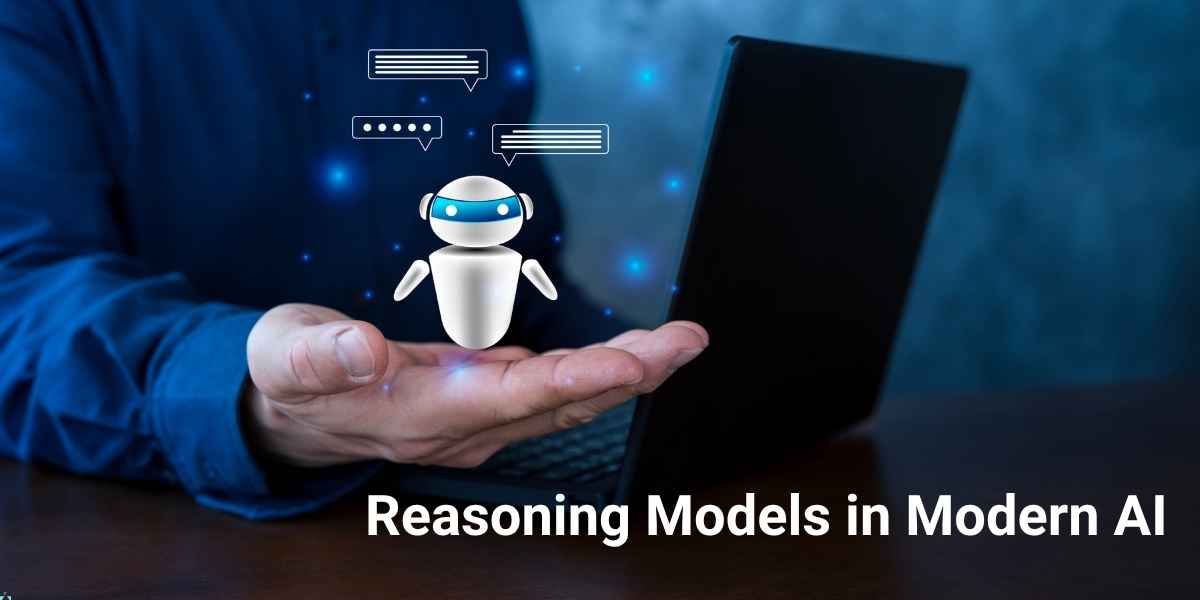
ToggleArtificial intelligence has evolved rapidly from systems that simply generated text to Reasoning Models capable of reasoning through complex problems. Modern reasoning models are designed to process information in multiple steps, analyze large amounts of context, and make decisions in a structured way rather than relying only on pattern prediction. This shift has transformed AI from a conversational assistant into a more advanced analytical system that can support coding, research, finance, law, science, and enterprise automation.
Three companies currently dominate this field: OpenAI, Anthropic, and Google DeepMind. OpenAI’s GPT-4 and o-series models, Anthropic’s Claude 4 family, and Google’s Gemini 2.5 models represent the most advanced reasoning-focused systems available today. Although all three are based on transformer architectures and large-scale training, they differ significantly in design philosophy, reasoning approach, multimodal abilities, context length, and intended use cases.
This article explores what reasoning models are, how they function, how OpenAI, Claude, and Gemini compare, and why these systems are becoming increasingly important across industries.
What Are Reasoning Models?
Reasoning models are advanced large language models specifically trained to solve problems through structured analysis. Traditional language models primarily predict the next word in a sequence using patterns learned during training. Reasoning models go further by breaking problems into intermediate steps before producing an answer.
This approach is often referred to as “chain-of-thought reasoning.” Instead of responding immediately, the model internally evaluates the problem, organizes relevant information, and generates a logical sequence of reasoning before arriving at a conclusion.
Reasoning models are especially effective for tasks such as:
- Mathematical problem-solving
- Coding and debugging
- Legal and financial analysis
- Scientific reasoning
- Multi-document summarization
- Strategic planning
- Long-context understanding
- Tool-assisted workflows
Unlike earlier chat-oriented systems, these models can maintain context across extremely long documents, interact with external tools, and solve multi-stage tasks that require planning.
Several defining features separate reasoning models from standard language models:
Chain-of-Thought Processing
Reasoning models internally generate intermediate reasoning steps. This allows them to solve logical and multi-hop problems more accurately than traditional chat models.
Tool Integration
Modern reasoning systems can decide when to use tools such as web search, calculators, code interpreters, APIs, or databases. Instead of relying solely on memory, they can gather external information dynamically.
Long Context Windows
Many reasoning tasks require the model to process massive amounts of information. New systems support context windows of up to one million tokens or more, enabling them to analyze books, code repositories, research archives, or lengthy conversations.
Multi-Step Planning
Reasoning models can break large objectives into smaller tasks. This capability is important for software engineering, business automation, and agentic AI workflows.
Multimodal Understanding
Modern models increasingly support images, audio, video, and code alongside text. This allows them to reason across different forms of information simultaneously.
Improved Reliability
Because these systems are trained to reason step by step, they often produce more coherent and accurate outputs for difficult tasks.
What are OpenAI’s Reasoning Models?
OpenAI introduced reasoning-focused capabilities through GPT-4 and later expanded them through the o-series models, including o3 and o4-mini. These systems are designed to “think longer” before responding and are optimized for difficult analytical tasks.
Improved Reliability
OpenAI’s reasoning models are strong general-purpose systems capable of:
Advanced coding
- Advanced coding
- Mathematical reasoning
- Tool use
- Long-form analysis
- Multi-step planning
- Image reasoning
- Enterprise automation
One of OpenAI’s key strengths is its integration of reasoning with external tools. The models can decide when to use browsing, coding environments, or file analysis tools to solve problems more effectively.
For example, instead of answering a financial forecasting question directly, the model can:
- Search for recent data
- Write Python code to process it
- Generate calculations
- Produce visual analysis
- Explain conclusions
This tool-assisted reasoning approach makes OpenAI’s systems highly adaptable.
Architecture and Training
Although OpenAI has not publicly disclosed full architectural details, GPT-4 and the o-series are believed to use large transformer-based systems trained on diverse internet text, code, and multimodal datasets.
The company heavily emphasizes reinforcement learning and alignment training. Its reasoning models are refined using human feedback and adversarial evaluation to improve instruction-following and reduce harmful outputs.
OpenAI also redesigned its infrastructure for large-scale reasoning workloads, including extensive supercomputing support through Microsoft Azure.
Architecture and Training
OpenAI models now support extremely large context windows, allowing them to process long documents and large datasets efficiently.
The models also support multimodal reasoning. GPT-4o and the newer o-series can analyze images and combine visual understanding with textual reasoning.
This capability is valuable in areas such as:
- This capability is valuable in areas such as:
- Medical imaging analysis
- Diagram interpretation
- UI design review
- Technical documentation
- Educational problem solving
Strengths
OpenAI’s major strengths include:
- Strong overall reasoning
- Excellent coding performance
- Broad ecosystem support
- Effective tool integration
- High-quality conversational outputs
- Enterprise-ready APIs
Its models are particularly effective for workflows that combine reasoning, coding, and external tools.
Limitations
Despite their capabilities, OpenAI models still face challenges:
- Hallucinations can still occur
- Long reasoning processes increase latency
- Large-scale reasoning is computationally expensive
- Performance may vary on highly specialized domains
What is Anthropic Claude 4?
Anthropic’s Claude 4 family includes two primary models: Claude Opus 4 and Claude Sonnet 4. These systems are heavily optimized for reasoning, coding, long-context understanding, and safety
Claude has gained significant attention for its strong software engineering abilities and its ability to maintain coherent reasoning over extremely large contexts.
Claude Opus vs Sonnet
Claude Opus 4:
The flagship model focused on maximum reasoning performance and complex problem-solving.
Claude Sonnet 4:
A lighter, faster, and more cost-efficient version designed for lower latency applications. This structure allows developers to choose between maximum capability and faster response speed.
Reasoning Extended Thinking
Claude 4 is widely recognized for strong performance in coding benchmarks. It performs particularly well in:
- Code generation
- Refactoring
- Multi-file reasoning
- Debugging
- Software architecture planning
- Long codebase analysis
Anthropic designed Claude to maintain structured reasoning during extended software engineering tasks. One of Claude’s most distinctive features is its ability to sustain coherent reasoning over very long sessions.
Extended Thinking Mode
Claude 4 includes an “extended thinking” capability that allows the model to internally reason through complex problems before generating responses.
This helps the model:
- Avoid premature conclusions
- Maintain logical consistency
- Handle ambiguous tasks more effectively
- Produce higher-quality analytical outputs
Anthropic also developed mechanisms for summarizing lengthy internal reasoning processes.
Memory and Context Handling
Claude supports extremely large context windows, reaching up to one million tokens.
This allows the system to analyze:
Claude supports extremely large context windows, reaching up to one million tokens.
This allows the system to analyze:
- Large legal archives
- Massive code repositories
- Long research papers
- Multi-day conversations
- Enterprise documentation
Claude also supports memory-like workflows where important information can persist across interactions
Safety and Constitutional AI
Anthropic places strong emphasis on AI safety.
The company uses a training approach called Constitutional AI, where the model learns to follow principles related to helpfulness, honesty, and harmlessness.
This framework is intended to:
- Reduce harmful responses
- Improve transparency
- Encourage safer reasoning
- Maintain ethical constraints
Anthropic also applies stricter safeguards to its most capable models because of concerns about misuse in sensitive domains.
Strengths
Claude 4 performs especially well in:
- Long-context reasoning
- Coding and software engineering
- Multi-step analysis
- Structured planning
- Safety-focused enterprise environments
Its ability to handle massive documents and maintain coherent reasoning makes it highly valuable for professional and technical workflows.
Limitations
Claude’s primary limitations include:
- Slower performance during deep reasoning
- Higher computational cost for advanced models
- Occasional over-analysis
- Limited public multimodal capabilities compared to Gemini
What is Google Gemini 2.5?
Google DeepMind’s Gemini 2.5 represents Google’s most advanced reasoning-focused AI system. Gemini was designed as a fully multimodal “thinking model” capable of reasoning across text, images, audio, video, and code.
Google offers two main versions:
- Gemini 2.5 Pro
- Gemini 2.5 Flash
Gemini Pro focuses on maximum reasoning capability, while Flash is optimized for faster and more efficient inference.
Multimodal Design
Gemini’s strongest differentiator is its native multimodal architecture.
Unlike systems primarily optimized for text, Gemini was trained from the beginning to process multiple media types together.
The model can reason across:
- Documents
- Images
- Video
- Audio
- Code
- Text
This enables use cases such as:
- Video analysis
- Audio transcription and reasoning
- Multimedia search
- Scientific visualization
- Educational tutoring
Google demonstrated Gemini analyzing hours of video content while maintaining contextual understanding.
Sparse Mixture-of-Experts Architecture
Gemini 2.5 uses a sparse Mixture-of-Experts (MoE) transformer architecture.
In MoE systems, only a subset of the model’s parameters are activated for each token.
This provides several benefits:
- Larger effective model capacity
- Larger effective model capacity
- Better efficiency
- Reduced compute per token
This architecture helps Gemini manage extremely large contexts and multimodal workloads efficiently.
Long Context Windows
Gemini 2.5 supports context windows reaching one million tokens, with larger limits planned.
This allows the model to process:
- Entire books
- Large enterprise datasets
- Research archives
- Long video transcripts
- Extensive coding projects
Long-context capability is one of Gemini’s most important strengths.
Benchmark Performance
Gemini performs strongly on:
- Mathematical reasoning
- Scientific problem-solving
- Coding benchmarks
- Multimodal understanding
- Human preference evaluations
Google positioned Gemini as a system optimized not only for text generation but also for advanced reasoning and multimodal analysis.
Strengths
Gemini’s major advantages include:
- Native multimodal reasoning
- Efficient MoE scaling
- Long-context processing
- Strong scientific reasoning
- Integration with Google infrastructure
Its ability to process video and audio at scale gives it broader media capabilities than most competitors.
Limitations
Gemini still faces several challenges:
- Hallucinations remain possible
- Large-scale reasoning can increase latency
- Multimodal workflows require significant compute
- Enterprise deployment complexity may vary
Comparing OpenAI, Claude, and Gemini
Although all three companies focus on reasoning AI, their priorities differ.
OpenAI emphasizes general-purpose intelligence combined with strong tool integration.
Its models are highly versatile and suitable for:
- Research
- Coding
- Enterprise assistants
- Data analysis
- Workflow automation
The ecosystem around ChatGPT and OpenAI APIs also makes deployment easier for many developers.
Claude
Anthropic focuses heavily on:
- Safety
- Long-context reasoning
- Coding
- Structured analysis
Claude is especially strong for enterprise knowledge work and software engineering tasks.
Gemini
Google prioritizes:
- Multimodal reasoning
- Massive scale
- Scientific and mathematical tasks
- Integration with Google ecosystems
Gemini is particularly well suited for workflows involving audio, video, and large multimedia datasets.
How Reasoning Models Work
Despite their differences, OpenAI, Claude, and Gemini share several technical foundations.
Transformer Architecture
All three rely on transformer-based neural networks.
Transformers process information through attention mechanisms that allow the model to understand relationships between words, images, or other data elements.Large-Scale Pretraining
These models are trained on enormous datasets containing:
- Internet text
- Code repositories
- Books
- Images
- Scientific data
- Multimedia content
This pretraining phase teaches general knowledge and language understanding
Alignment and Fine-Tuning
After pretraining, models are refined through methods such as:
- Reinforcement learning
- Human feedback
- Safety tuning
- Constitutional training
These processes improve reliability and instruction-following.
Internal Reasoning
Reasoning models internally generate intermediate analytical steps before producing answers.
This process improves performance on:
- Logic problems
- Multi-hop reasoning
- Mathematical tasks
- Planning problems
- Code debugging
Tool Use
Modern reasoning systems increasingly function as AI agents.
Instead of relying entirely on built-in knowledge, they can:
- Search the web
- Execute code
- Query APIs
- Read files
- Analyze databases
This dramatically expands their capabilities.
Real-World Applications
Reasoning models are already transforming multiple industries.
Software Development
AI coding assistants powered by reasoning models can:
- Generate code
- Refactor projects
- Debug systems
- Explain architecture
- Manage repositories
Claude and OpenAI models are especially popular in software engineering workflows.
Legal and Financial Analysis
Reasoning systems can process large contracts and identify hidden clauses or inconsistencies.
They are increasingly used for:
- Due diligence
- Compliance review
- Risk analysis
- Financial forecasting
- Document summarization
Scientific Research
Researchers use reasoning models for:
- Literature review
- Data analysis
- Experiment planning
- Mathematical problem-solving
- Technical summarization
Gemini’s multimodal reasoning is particularly useful in scientific environments involving visual data.
Enterprise Automation
Organizations are deploying AI agents capable of:
- Managing workflows
- Scheduling tasks
- Handling documentation
- Responding to support requests
- Coordinating information across systems
These applications depend heavily on reasoning and planning capabilities.
Education
Reasoning models can provide:
- Step-by-step tutoring
- Personalized explanations
- Problem-solving guidance
- Interactive learning support
The ability to explain intermediate reasoning steps makes them useful educational tools.
Why Reasoning Models are Needed
The rise of reasoning models represents a major shift in artificial intelligence.
Earlier AI systems were mainly conversational tools. Modern reasoning models behave more like analytical systems capable of planning, interpreting, and acting.
Several factors explain why they are increasingly important.
Autonomous AI agents require: Planning, Memory, Tool use, Decision-making, Context management. Reasoning models provide the foundation for these systems, and this shift is already visible in projects like self-improving AI agents such as Hermes Agent, which build persistent memory across sessions instead of resetting each time.
Solving Complex Problems
Many real-world tasks require multiple reasoning steps. Traditional language models often struggle with deep logic or extended planning.
Reasoning models improve performance by explicitly analyzing problems before answering.
Handling Large Contexts
Modern enterprises generate enormous amounts of data.
Reasoning systems can process long documents, conversations, and datasets in a single session, reducing fragmentation and improving understanding.
Supporting AI Agents
Autonomous AI agents require:
- Planning
- Memory
- Tool use
- Decision-making
- Context management
Reasoning models provide the foundation for these systems.
Improving Reliability
Step-by-step reasoning improves consistency and reduces some forms of hallucination.
Although these systems are not perfect, they are generally more reliable than earlier generation chat models for analytical tasks.
Expanding Human Productivity
Reasoning AI is increasingly used to augment professionals in:
- Engineering
- Finance
- Law
- Medicine
- Research
- Education
Rather than replacing expertise entirely, these systems often function as high-capacity assistants.
What are the Current Challenges
Despite major progress, reasoning models still face important limitations.
- Hallucinations: Even advanced reasoning systems can generate incorrect or fabricated information.
- Computational Cost: Deep reasoning requires significant compute resources, increasing operational costs.
- Latency: Long reasoning chains can slow response times.
- Safety Risks: As reasoning capabilities improve, concerns about misuse also increase. Advanced systems may be capable of assisting with harmful activities if safeguards fail — one of the most critical examples being prompt injection, where malicious instructions hidden in tool outputs or documents can manipulate a reasoning model's behavior..
- Transparency: Although reasoning models generate intermediate steps, their internal processes are still not fully interpretable.
Understanding exactly how these systems make decisions remains an ongoing research challenge.
Conclusion
OpenAI, Anthropic, and Google are shaping the future of reasoning-focused artificial intelligence.
OpenAI’s GPT and o-series models emphasize versatile reasoning combined with strong tool integration and broad ecosystem support. Anthropic’s Claude 4 family focuses on long-context understanding, structured analysis, coding excellence, and safety. Google’s Gemini 2.5 pushes multimodal reasoning forward through massive scale, long-context processing, and native support for text, images, audio, and video.
Together, these systems represent a major transition in AI development. Modern models are no longer limited to simple text generation. They can plan, reason, analyze, code, summarize, and interact with external systems in increasingly sophisticated ways.
Reasoning models are already reshaping industries including software engineering, research, finance, education, and enterprise automation. As these systems continue to evolve, they are likely to become even more integrated into daily workflows and decision-making processes.
At the same time, challenges involving hallucinations, cost, safety, and transparency remain unresolved. Human oversight, careful deployment, and responsible governance will continue to be essential.
The competition between OpenAI, Claude, and Gemini is accelerating progress across the AI industry. Each company approaches reasoning differently, but all are moving toward the same goal: creating systems capable of deeper understanding, stronger planning, and more reliable intelligence.
In many ways, reasoning models mark the beginning of a new phase in artificial intelligence one where AI does not simply generate responses, but actively thinks through problems before answering.
Frequently Asked Question
1. What is a reasoning model in AI?
A reasoning model is an AI system designed to solve problems step by step instead of simply predicting text. These models can analyze information, plan tasks, and generate more logical responses.
2. Which reasoning model is best for coding?
Claude 4 is widely considered one of the strongest models for coding and software engineering tasks because of its ability to understand large codebases and maintain structured reasoning
3. Why is Gemini 2.5 considering different from other models?
Gemini 2.5 stands out because it is fully multimodal. It can process text, images, audio, video, and code together, making it useful for complex multimedia tasks.
4. Are reasoning models completely accurate?
No. Even advanced reasoning models can still make mistakes or generate incorrect information. Human review is still important for high-stakes tasks.
5. Why are companies investing heavily in reasoning AI?
Reasoning AI can automate complex workflows, improve productivity, and assist professionals in areas like coding, finance, research, and legal analysis. This makes it valuable for both businesses and consumers.