
Table of Contents
ToggleArtificial Intelligence gets smarter, the greatest competitive advantage isn’t becoming more like machines, it’s becoming more human. Not long ago, being the smartest person in the room was considered the ultimate career advantage. Those who could process information faster, analyze complex data, solve technical problems, and retain vast amounts of knowledge often stayed ahead. Today, AI can perform many of those same tasks in seconds. It can write reports, generate code, summarize meetings, analyze millions of data points, predict customer behavior, and even assist with strategic decision-making. With every new advancement, AI becomes faster, more capable, and able to automate tasks that once required uniquely human expertise.
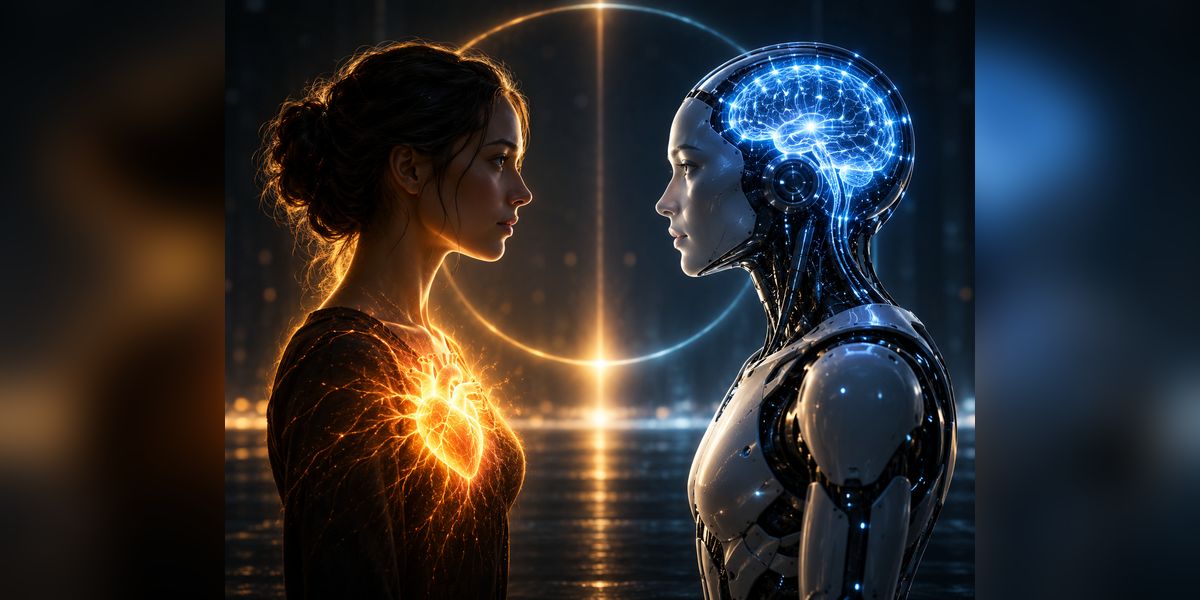
This shift raises an important question. The real challenge is no longer whether AI will replace human intelligence, it is understanding what remains uniquely human when intelligence itself becomes widely accessible. The answer isn’t a higher IQ or technical expertise alone. It is Emotional Intelligence. Ironically, the more advanced AI becomes, the more valuable human qualities such as empathy, self-awareness, communication, and trust become. Machines can process information with incredible speed, but only people can truly understand emotions, build meaningful relationships, and inspire others. In the AI era, these human capabilities are no longer “soft skills”—they are becoming the defining skills for effective leadership and long-term success.
The AI Revolution Is Changing What Makes People Valuable
Throughout history, technology has transformed the way we work. Factories automated manufacturing, software streamlined paperwork, and the internet revolutionized access to information. Today, Artificial Intelligence is driving the next wave of transformation by automating cognitive tasks. Activities that once required hours of analysis now happen in minutes. Routine decision-making is increasingly handled by algorithms, administrative work is disappearing, and content creation has become dramatically faster.This shift is also why many professionals are experiencing AI anxiety.
However, this does not mean humans are becoming less important. It means human value is shifting. Organizations are beginning to realize that competitive advantage no longer comes only from efficiency. It comes from qualities that technology still struggles to replicate, including:
- Empathy
- Trust
- Judgment
- Compassion
- Ethical reasoning
- Creativity rooted in human experience
- Relationship building
As AI takes over repetitive cognitive work, these deeply human capabilities become the new differentiators. Employers are increasingly seeking leaders who combine technical understanding with empathy, resilience, adaptability, and the ability to guide people through change.
Intelligence Answers Questions. Emotional Intelligence Understands People.
Imagine two managers receiving the same performance report. Both notice declining productivity, yet their responses are entirely different. The first manager immediately focuses on the numbers, targets, deadlines, and corrective actions. The second manager pauses and asks deeper questions: What changed? Is the team overwhelmed? Are people struggling with uncertainty? What aren’t they telling me?
The data is identical, but the leadership approach is not. While AI excels at identifying patterns and presenting insights, Emotional Intelligence helps leaders understand the human story behind those patterns. It uncovers the emotions, challenges, and motivations that data alone cannot reveal, and that difference can transform the way teams perform.
AI Can Predict Behavior. It Cannot Feel Human Experience.
Modern AI has made remarkable progress in understanding human communication. It can recognize emotions in text, detect frustration in customer messages, recommend supportive responses, and even generate language that sounds empathetic. However, empathy is far more than choosing the right words, it is the ability to understand another person’s lived experience.To see how this plays out in daily work, explore the power of empathy at the workplace.
A manager comforting an employee after the loss of a loved one, a teacher recognizing that a student’s silence may reflect anxiety rather than disinterest, or a leader sensing unspoken fear during organizational change are moments that go beyond data and algorithms. These situations cannot be reduced to probabilities or automated responses; they require genuine emotional presence and human connection.
People rarely remember every word a leader says, but they always remember how that leader made them feel. It is these emotional experiences that build trust, strengthen loyalty, and foster long-term engagement, qualities that no technology can truly replicate.
Emotional Intelligence Builds What AI Cannot
Organizations invest millions in technology to improve efficiency, automate processes, and drive innovation. However, technology alone does not create high-performing teams—people do. The strongest workplaces are built on qualities that cannot be automated or programmed, such as trust, respect, collaboration, and meaningful human connections. These values are developed through everyday interactions, open communication, and consistent leadership.
Emotionally intelligent leaders foster environments where employees feel safe to ask questions, admit mistakes, and share new ideas without fear of judgment. This culture of openness, often referred to as psychological safety, encourages individuals to take risks, collaborate more effectively, and contribute their best work. When people feel valued and supported, innovation flourishes, making psychological safety one of the most powerful drivers of team performance in today’s AI-driven workplace.
The Skills AI Still Cannot Master
Every major technological shift creates new skill gaps, and the AI era is no exception. Ironically, the skills becoming most valuable today are not purely technical—they are deeply human. While AI can automate tasks and enhance decision-making, it cannot authentically replicate the emotional and interpersonal abilities that enable people to lead, collaborate, and make thoughtful decisions.
Some of the most critical skills for the future include:
- Self-awareness: Understanding your own emotions, recognizing personal biases, and managing stress before it affects others.
- Empathy: Listening beyond words, understanding unspoken concerns, and recognizing emotional cues.
- Relationship Building: Building trust over time, navigating difficult conversations, and resolving conflicts with respect.
- Adaptability: Helping teams embrace uncertainty and leading change with confidence rather than fear.
- Ethical Judgment: Knowing when efficiency should not outweigh humanity and making decisions that balance data with values.
These are the capabilities AI can support but cannot genuinely replace. As organizations increasingly integrate AI into their operations, qualities such as empathy, ethical judgment, relationship-building, and critical thinking are emerging as the defining skills of successful professionals and leaders.
Why Companies Are Hiring for Emotional Intelligence
A decade ago, emotional intelligence was often viewed as a “soft skill”, valuable, but secondary to technical expertise. Today, that perception has changed. Organizations increasingly recognize emotional intelligence as a critical business skill because its impact is measurable and directly influences organizational performance.
Poor emotional intelligence can lead to significant workplace challenges, including:
- Miscommunication
- Employee burnout
- High turnover
- Low engagement
- Resistance to change
- Weak collaboration
As a result, high-performing organizations are evaluating leaders not only on business outcomes but also on how they achieve those results. Coaching, effective communication, adaptability, empathy, and the ability to build trust during periods of transformation have become essential leadership qualities. In the AI era, emotional intelligence is no longer an advantage, it is a business necessity.
The Human Advantage in an AI Workplace
Think about the most memorable leader you’ve worked with. Chances are, you don’t remember them because they created the perfect spreadsheet, wrote flawless emails, or always had the right technical answer. You remember them because they believed in their people, listened without interrupting, remained calm during difficult moments, made everyone feel included, and inspired confidence even in times of uncertainty.
These are the qualities that leave a lasting impact because leadership is fundamentally about human connection. While AI can become an exceptional assistant by improving productivity and supporting decision-making, it cannot inspire, motivate, or build trust in the way people can. In an increasingly AI-driven workplace, the ability to connect with others on a human level will remain one of the greatest strengths of effective leaders
Can AI Ever Become Emotionally Intelligent?
As AI continues to evolve, an important question emerges: Can it ever become truly emotionally intelligent? Researchers are actively developing emotionally aware AI systems that can recognize emotional cues, personalize conversations, and respond in ways that appear more empathetic. As these technologies advance, AI will likely become increasingly effective at detecting emotional patterns and generating supportive responses.
However, there is a fundamental difference between simulating emotions and experiencing them. An AI can recognize sadness, but it cannot experience grief. It can generate comforting words, but it does not feel compassion. It can identify stress, yet it does not carry emotional responsibility or understand the personal experiences behind those emotions.
Understanding emotions through data is not the same as living through them. This distinction is what makes human emotional intelligence irreplaceable. Even as AI becomes more sophisticated, the ability to genuinely empathize, connect, and support others through shared human experiences will remain one of our most valuable strengths
Developing Emotional Intelligence Is No Longer Optional
The good news is that, unlike IQ, emotional intelligence can be developed and strengthened over time. It is not an innate talent reserved for a few, it is a skill that grows through self-awareness, conscious practice, and consistent effort. Small, intentional habits can make a significant difference in how we communicate, lead, and build relationships.
Some simple yet powerful ways to strengthen emotional intelligence include:
- Listen to understand, not just to respond.
- Ask more questions than you answer.
- Pause before reacting emotionally.
- Seek honest feedback about your communication.
- Practice empathy, even during disagreements.
- Reflect on how your decisions affect people, not just outcomes.
These habits do more than improve leadership, they strengthen every relationship, foster trust, and help create more collaborative and resilient teams. In an AI-driven world, developing emotional intelligence is one of the most valuable investments individuals can make in their personal and professional growth.
The Future Belongs to Human-Centered Leaders
The next generation of successful professionals will not compete against AI, they will learn to collaborate with it. As AI takes on tasks such as processing information, generating insights, and increasing productivity, the human role will evolve toward interpreting those insights, exercising sound judgment, and bringing purpose to decisions. The future of work is not about choosing between humans and machines; it is about combining the strengths of both.
Organizations that thrive in the AI era will not simply be those with the most advanced technologies. They will be the ones led by individuals who can balance technological intelligence with emotional wisdom. These leaders will use AI to enhance efficiency while relying on empathy, trust, communication, and ethical judgment to inspire people and navigate change. As AI continues to learn how humans think, the most effective leaders will continue learning how humans feel—and that will remain their greatest competitive advantage.
Conclusion: The More Intelligent AI Becomes, the More Human We Must Become
History has shown that every technological revolution reshapes the value of human skills, and the AI revolution is no different. As machines become increasingly capable of processing information, automating tasks, and generating insights, the qualities that truly set people apart are becoming deeply human, understanding emotions, building trust, making ethical decisions, and leading with empathy. These capabilities cannot be programmed or automated; they are developed through experience, meaningful relationships, self-reflection, and genuine human connection.
As we move through 2026 and beyond, success will not belong solely to those who know how to use AI. It will belong to those who know how to lead people in an AI-driven world. The future belongs to professionals who can combine technological capability with emotional intelligence, using AI as a tool while putting people at the center of every decision. Because in a world where machines can think, the people who can truly connect will always matter most.
Let’s refine your stalking skills; go through our Instagram and LinkedIn.